
The finance ministry has put out a revised draft in public domain.

'We want to play the value game for our consumers, which is health and retail will grow faster for us than the group.'

State Bank of India, NTPC, Nestle, Sun Pharma, JSW Steel, ITC, Mahindra & Mahindra and HCL Technologies were among the other major gainers.

Borrowing from a fraudulent loan app subjects the borrower to a variety of risks.

'There will be 200 ITIs developed as hubs, while 800 will be developed as spoke, connected with five National Skill Training Institutes.'

'Have a long way to go even as a small finance bank, both in terms of size, and in terms of fulfilling our aspirations for financial inclusion.'

Following the allegations by TFPC on July 29, the representatives of the actors' body, The South Indian Artistes' Association aka Nadigar Sangam claimed that they got to know about the decision only when it was reported in the media.

The home loan top-up, a kind of secured multipurpose personal loan, is on the regulator's radar, points out Tamal Bandyopadhyay.

'Pandemic has triggered interest and awareness among the people about the need for healthcare.'

The financial prosecutor's office declined to comment.


'While on the one hand, terrorism continues to be a serious threat to global peace and security, on the other hand, areas such as cyber, maritime and space, are emerging as new theatres of conflict'

The International Financial Services Centre Authority (IFSCA) plans to operationalise the framework for direct listing of companies at International Financial Services Centre (IFSC) exchanges by the end of the year, said Chairperson K Rajaraman. He added that the amendments would be notified within three months. Further, the GIFT City regulator is also considering the launch of separate payments system regulations - similar to that of the real time gross settlement (RTGS) for banking within a few months.

Three years after India declared its goal to become a net-zero economy by 2070, the policy design for achieving the target has begun, with the NITI Aayog forming dedicated multi-sectoral committees to prepare a transition plan. In 2021, India joined a select group of nations that set a target year for becoming net-zero carbon economy. At COP26 in Glasgow, Prime Minister Narendra Modi outlined a five-pronged 'Panchamitra' climate action target for India and committed to a net-zero target by 2070, joining nations like the US, the UK, and China.
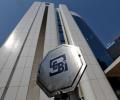
Sebi on Tuesday restrained two Brightcom Group officials, M Suresh Kumar Reddy and Narayan Raju, from holding any managerial position in the company or its subsidiaries until further orders. Reddy is the promoter-cum-chairman and MD of Brightcom Group Ltd (BGL) while Raju is the chief financial officer. Besides, the regulator also banned Reddy from the securities market until further orders.

The Competition Commission of India has approved the acquisition of 31.27 per cent of additional stake in Religare Enterprises by four entities of Dabur India promoter Burman family, enabling them to become majority owners in the financial services firm. The fair trade regulator allowed the four entities to acquire Religare's 5.27 per cent through stock market purchase and another 26 per cent through an open offer.

As the number of students seeking higher education abroad continues to rise, several countries are implementing new rules. Gaurav Batra, CEO and founder of Infinite Group highlights how these changes will impact Indians who are planning to study abroad.
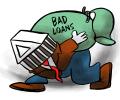
Commercial banks have turned cautious in lending to smaller microfinance institutions (MFIs), which has compelled the latter to borrow from non-banking financial companies (NBFCs) at much higher rates. Recently Reserve Bank of India (RBI) Deputy Governor M Rajeshwar Rao slammed micro lenders for increasing their margins "disproportionately" and said these lenders were quick to pass on the increased cost to the borrowers but reluctant to pass on the benefits under the new regime, where margins are not capped.

Shiv Sena MP Sanjay Raut routed his unaccounted money through various shell companies opened in the name of his family members and associates, his former aide and prime witness in the money laundering case linked to the redevelopment of Patra 'chawl' project told the Enforcement Directorate (ED).

'Primary buyers are commercial taxi and fleet operators and small businessmen.' 'CNG prices have been remarkably stable unlike petrol.'

Shares of Zee Entertainment Enterprises Ltd (ZEEL) tumbled 12 per cent in the mid-session trade on Wednesday amid reports of capital market regulator Sebi has unearthed a financial discrepancy exceeding USD 241 million (nearly Rs 2,000 crore) in the accounts of the company. The stock of the company nosedived 11.58 per cent to Rs 170.65 apiece on the BSE. ZEEL shares plunged 11.39 per cent to Rs 170.70 per piece on the NSE.

'The real repo rate is very high in terms of core inflation.'

The new regulatory body would be called the Civil Aviation Authority and would replace the Directorate General of Civil Aviation.

The interchange fee -- paid by the card-issuing bank when a customer swipes at another bank's ATM, including at white-label ATMs -- may be raised to Rs 20 to Rs 23.

The battle for the top spot in the two-wheeler market is intensifying. The gap between Hero MotoCorp and Honda Motorcycle & Scooter India (HMSI) in retail sales narrowed to just 45,607 units in June. This improvement comes as HMSI has clawed back market share after dipping to a historic low of 18 per cent in May 2023. Now, the retail market shares of the two companies are 28.86 per cent and 25.54 per cent, respectively, compared to 35.54 per cent and 18.05 per cent in May 2023.

'The shadow banks are currently facing a liquidity and solvency crisis.' 'The danger is that it could potentially engulf the entire financial system because shadow banks have borrowed huge amount of money from banks, mutual funds, pension funds, and insurance companies.'

Has Vijay Shekhar Sharma given up on the bank? For now, he seems to be on a save-OCL mission. The bank will face its logical end, observes Tamal Bandopadhyay.

'We do not believe in fire sale. We don't do it.'

Wockhardt said, the drug regulator suspended the manufacture, sale or distribution of fixed dose combination of Dicyclomine Hydrochloride IP 10mg

Finance Minister Nirmala Sitharaman on Tuesday said the securities transaction tax (STT) will be increased on futures and options (F&O) trade from October 1 to discourage retail investors from investing in the risky instrument.

Be mindful that each instrument is governed by a different set of gifting rules and is also taxed differently.

Ramalingam Kalirajan explains the pros and cons of both investment types.

'If the borrower can't repay the loan due to lack of income or losses from speculative activities, they risk defaulting on it.' 'This could lead to the bank seizing the property.'
The stock exchange BSE has called off the merger of its unit at the Gujarat International Finance Tec-City International Financial Services Centre (GIFT IFSC), India International Exchange (India INX), with NSE International Exchange (NSE IX), a similar unit floated by rival National Stock Exchange (NSE), according to sources familiar with the development. BSE and NSE had been in discussions for the merger for over a year, but it has yielded no results, they said.
The proposed move would help in cutting down compliance costs and reducing the friction between rules enacted by capital markets watchdog Sebi, depositories and government, experts said.

The finance ministry is in favour of extending the August deadline for public sector banks (PSBs) as well as insurance companies to increase their minimum public shareholding (MPS) to the mandated 25 per cent, said a senior government official. "The election results will determine the course of action. "Most likely, those who did not receive an extension to meet the minimum shareholding norm will be granted one," the senior government official said.

The Financial Sector Legislative Reforms Commission, chaired by Justice B N Srikrishna, has suggested a non-sectoral, principle-based approach to revamp the existing framework.
The government today said the proposed Financial Stability and Development Council, an inter-regulatory agency headed by the finance minister, would not act as a super regulator.

The regulatory gap between crypto firms registered with the Financial Intelligence Unit-India (FIU-India) and unregistered offshore entities is expected to narrow, industry players said, after global crypto players Binance and KuCoin received approvals to register with India's anti-money laundering unit.
